Sharkskin on the Tarmac: Henry Bilinsky and MicroTau
At an industrial facility in Sydenham not far from Sydney Airport, and a manufacturing facility hosted at UNSW in Kensington, Henry Bilinsky, MicroTau’s CEO, is leading a world-first application of biomimicry applied in the aviation industry. The technology mimics the ridged texture of shark skin that reduces drag and allows sharks to efficiently move through the ocean. MicroTau prints similar microscopic patterns onto film that is applied to aircraft to lower aircraft fuel by 4%, with further gains targeted.
MicroTau’s breakthrough is less about the concept and more about making it manufacturable. Using a form of photolithography, adapted from the semiconductor industry, Henry’s team can produce precision-patterned, aviation-grade films at scale.
The film is in flight testing with the US Air Force and has attracted commercial interest, including recent deals with Delta Airlines in the US and Vueling in Europe.
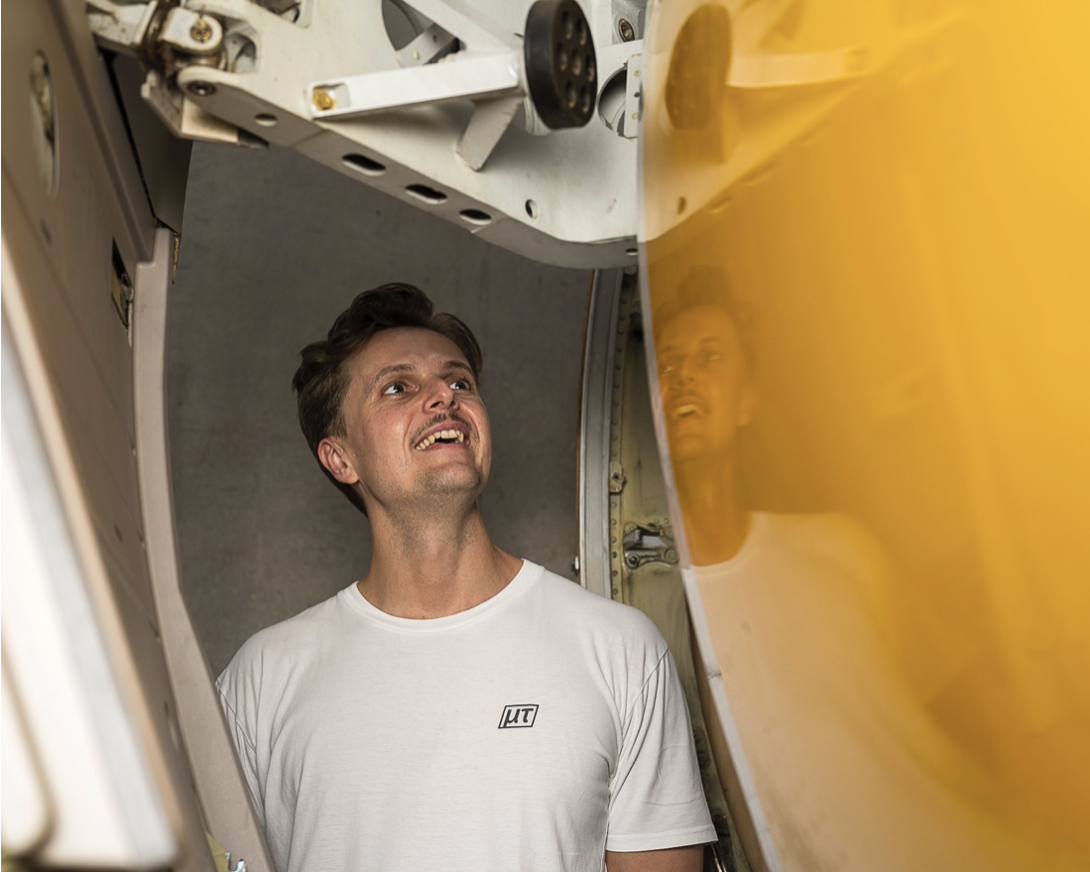
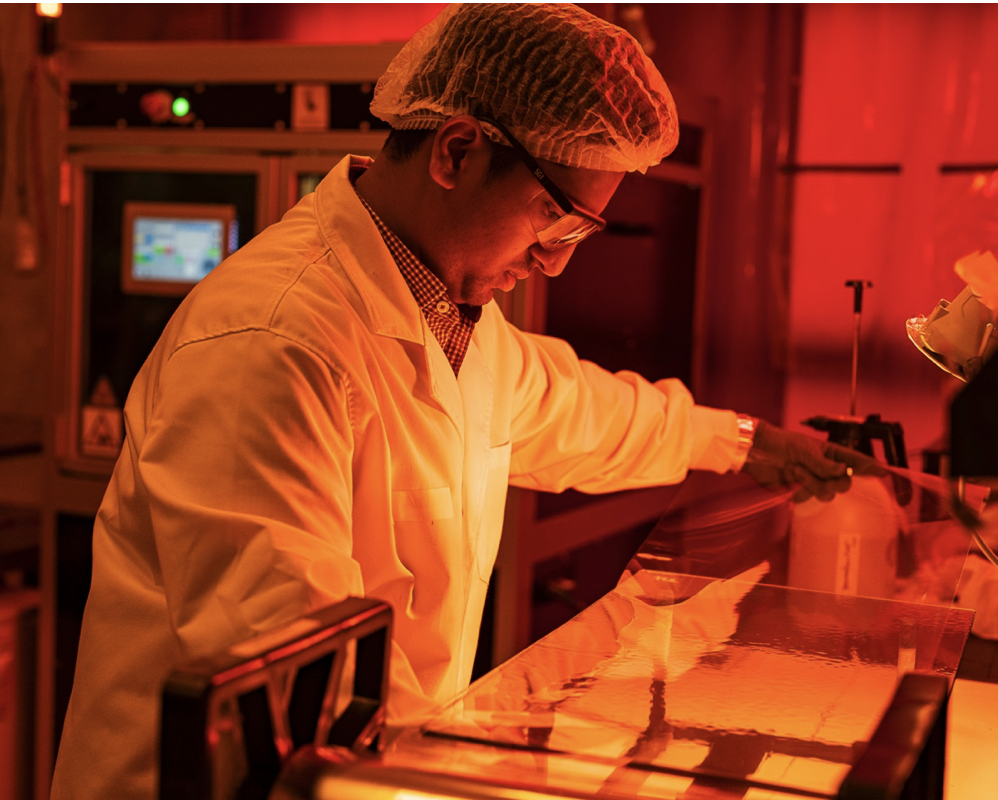
The images show the research facility basked in orange light, used to prevent the ultraviolet curing process from being affected, diffraction patterns from the film’s surface, through to production in process at UNSW.